Here are the notes on the present continuous
(aquí tenéis los apuntes en azul del present continous:
Copiad los apartados
1 structure
2 making the ing form
3 affirmative, negative and interrogative
(el 4 no porque lo veremos juntos en clase)
En el aparatado 2, making the ing form, tenéis dos opciones: copiarlo en inglés o en español. Si lo entendéis en inglés, lo copiais. Pero si lo leéis y veis que no lo entendéis, hay un enlace para copiarlo en español, lo veréis cuando leáis el aparatado 2)
(Comienzan los apuntes)
Present Continuous
1. Structure
It has 2 words: One is the verb to be :
And a verb in ing form
2. Making the ing form
Notes in English Prezi (clic to watch)
(podéis ver la presentación de esta mañana para repasarlo, antes de copiar)
General rule: we add ing
Study-----studying
Special case 1: E
Verbs ending in one E------- we drop the E, then we put the ING
Take-------tak + ing -------- taking
(only with one E: not see or agree)
Special case 2 CVC (Consonant Vowel Consonant)
Special Case 3: L
Only in British English, verbs ending in L, double the L
(In American English: Only one L)
Example: Label (etiquetar)
American English------ Labeling
British English---------- Labelling
Special Case 4 : IE
Verbs ending in IE, drop the IE, we put Y, and ING
Tie------T(bye, bye ie)-------- T(hello Y) y--------- Ty (hello ing) ing----tying
Si no entendéis estos apuntes en inglés, haced clic en el enlace, lo tenemos en español en esta página. (copiadlo sólo en un idioma: si lo entendéis, en inglés. Si no, en español)
Notes in Spanish (optional)
3. Affirmative, Negative and Interrogative
(Fin de lo que tenéis que copiar para el martes. Copiad los apuntes hasta la tabla inclusive) El resto lo veremos el martes.
4 Use and signal words
Watch the prezi and copy use 1, use 2 and use 3.
Prezi on how to use the present continuous
Notes in Spanish
Remember:
Actions happening now
Actions in progress now
Actions happening in an inmediate future
Signal words
miércoles, 23 de septiembre de 2015
martes, 15 de septiembre de 2015
The present: present simple, present continuous
Hi there!
These are the notes you must have in your notebook by Thursday.
(estos son los apuntes en azul, que tenéis que copiar en inglés en el cuaderno de aquí al viernes. Cuando pone una traducción en negro, si estáis seguros de lo que significa, no hace falta copiarlo en español, pero tenéis que saber bien qué pone en los apuntes)
Present Simple vs Present Continuous
The present simple only uses one word (palabra) in the affirmative
The present continuous uses 2 words (palabras), one is an ing form (una es una forma en ing)
Example:
A. Present Simple
1. Special verbs (that use no auxiliary)
2. Most verbs (that use auxiliary)
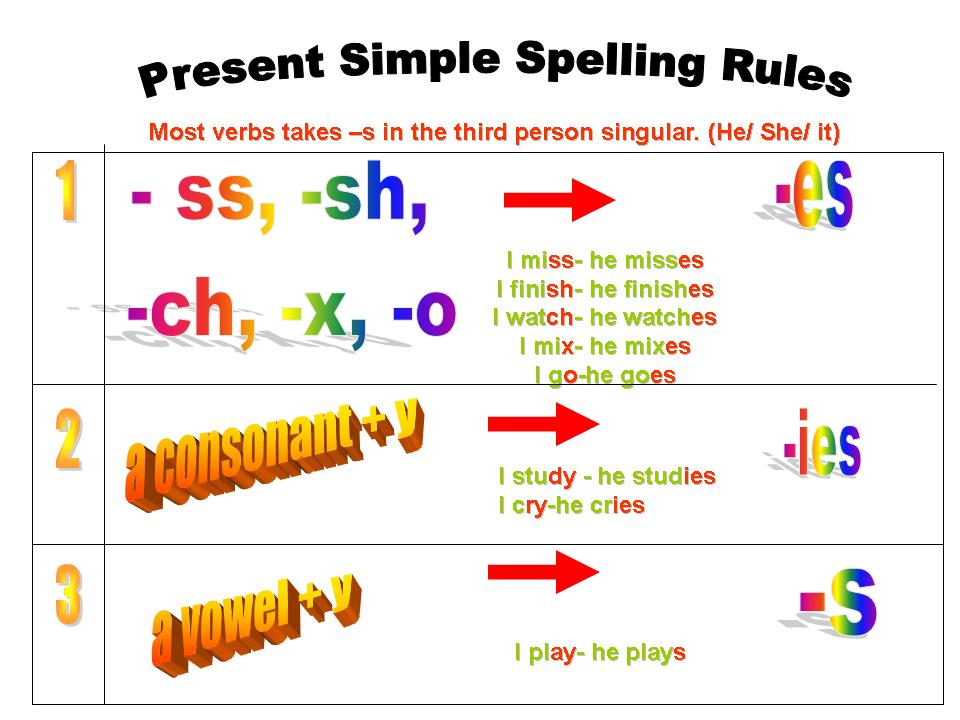
3. Spelling cases: third person singular S
4. Use and signal words
1. Special verbs (that use no auxiliary)
There are some verbs that don't use an auxiliary (do, does, don't, doesn't) to make the negative and interrogative.
(hay algunos verbos que no usan un auxiliar (do, does, don't, doesn't) para hacer ni la negativa ni la interrogativa).
Don't write do with these verbs when writing the negative or interogative
(no escribáis el auxiliar do con estos verbos para hacer su negativa o interrogativa)
Be - ser , estar
Can- poder, saber hacer
Have got- tener only in British English.
See photocopy (ver fotocopia, os daré estos verbos fotocopiados)
2. Most verbs (that use auxiliary)
Most verbs use do to make the negative and interrogative form
(la mayoría de los verbos, que si usan auxiliar do, does, don't o doesn't para hacer la negativa o la interrogativa)
Copy this example:
(recordad copiar la columna de afirmativa, la de negativa sólo la que pone contractions, interrogativa y short answers affirmative and negative)
3. Spelling cases: third person singular S
Most verbs add an "s" in the affirmative with the pronouns: HE, SHE, IT
(la mayoría de los verbos añaden una S en la afirmativa con los pronombres He, she, it)
But there are some cases where we put: (pero en algunos casos ponemos )
Copy this image and the examples (copiad esta imagen con los ejemplos)
Practise here
4. Use and signal words
There are many uses for the Present Simple, but we are mainly going to concentrate on two of them.
(Hay muchos usos del present simple, pero nos vamos a concentrar principalmente en dos de ellos).
Routines & Habits
General Truths &facts
(rutinas y hábitos--- verdades generales y hechos)
Example of routine and habit: Iván usually plays football at school.
Example of general truth: Madrid is the capital of Spain
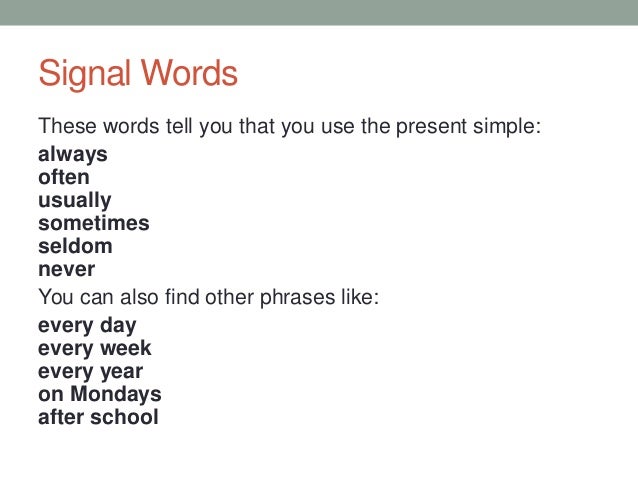
Signal words:
Copiad el significado de lo que no sepáis
Always (siempre)
Often (a menudo)
Sometimes (a veces)
Seldom (raramente)
Never (nunca)
Every day (cada día/ todos los días)
Every week (cada semana /todas las semanas)
Every year (cada año/todos los años)
O cualquier expresión de tiempo que vaya con Every
On Mondays (los lunes) Ojo, pone on MOndays, así que es todos los lunes
after school: después del colegio.
End of notes to be copied in notebook --- Fin de los apuntes a copiar en el cuaderno
This week we are going to go through the PRESENT
Simple, continuous and perfect
Look at this picture:
When do we use each?
Games to practise:
Only present simple
Prezi presentation
Important verbs (be, have got, can) (no auxiliary)
Rest of verbs (affimative, negative ad interrogative) Using and auxiliary
Spelling cases(adding the third person "S" go-goes, catch-catches....)
Use and Signal words
Interactive monkey
Adding the third person s
Only present continuous
Para familiarizarse con la estructura: Very easy (muy fácil)
(No os entretengáis mucho en este)
When do we put am, are or is: ? (Also very easy)
Adding ing form (añadiendo el ing)
Present simple and present continuous
You must know when to use one and the other
How fast can you think sentences (easy)
Snake and ladders (this one is good to practise)
These are the notes you must have in your notebook by Thursday.
(estos son los apuntes en azul, que tenéis que copiar en inglés en el cuaderno de aquí al viernes. Cuando pone una traducción en negro, si estáis seguros de lo que significa, no hace falta copiarlo en español, pero tenéis que saber bien qué pone en los apuntes)
Present Simple vs Present Continuous
The present simple only uses one word (palabra) in the affirmative
The present continuous uses 2 words (palabras), one is an ing form (una es una forma en ing)
Example:
A. Present Simple
1. Special verbs (that use no auxiliary)
2. Most verbs (that use auxiliary)
3. Spelling cases: third person singular S
4. Use and signal words
1. Special verbs (that use no auxiliary)
There are some verbs that don't use an auxiliary (do, does, don't, doesn't) to make the negative and interrogative.
(hay algunos verbos que no usan un auxiliar (do, does, don't, doesn't) para hacer ni la negativa ni la interrogativa).
Don't write do with these verbs when writing the negative or interogative
(no escribáis el auxiliar do con estos verbos para hacer su negativa o interrogativa)
Be - ser , estar
Can- poder, saber hacer
Have got- tener only in British English.
See photocopy (ver fotocopia, os daré estos verbos fotocopiados)
2. Most verbs (that use auxiliary)
Most verbs use do to make the negative and interrogative form
(la mayoría de los verbos, que si usan auxiliar do, does, don't o doesn't para hacer la negativa o la interrogativa)
Copy this example:
(recordad copiar la columna de afirmativa, la de negativa sólo la que pone contractions, interrogativa y short answers affirmative and negative)
3. Spelling cases: third person singular S
Most verbs add an "s" in the affirmative with the pronouns: HE, SHE, IT
(la mayoría de los verbos añaden una S en la afirmativa con los pronombres He, she, it)
But there are some cases where we put: (pero en algunos casos ponemos )
- ES
- IES
Copy this image and the examples (copiad esta imagen con los ejemplos)
Practise here
4. Use and signal words
There are many uses for the Present Simple, but we are mainly going to concentrate on two of them.
(Hay muchos usos del present simple, pero nos vamos a concentrar principalmente en dos de ellos).
Routines & Habits
General Truths &facts
(rutinas y hábitos--- verdades generales y hechos)
Example of routine and habit: Iván usually plays football at school.
Example of general truth: Madrid is the capital of Spain
Signal words:
Copiad el significado de lo que no sepáis
Always (siempre)
Often (a menudo)
Sometimes (a veces)
Seldom (raramente)
Never (nunca)
Every day (cada día/ todos los días)
Every week (cada semana /todas las semanas)
Every year (cada año/todos los años)
O cualquier expresión de tiempo que vaya con Every
On Mondays (los lunes) Ojo, pone on MOndays, así que es todos los lunes
after school: después del colegio.
End of notes to be copied in notebook --- Fin de los apuntes a copiar en el cuaderno
This week we are going to go through the PRESENT
Simple, continuous and perfect
Look at this picture:
When do we use each?
Games to practise:
Only present simple
Prezi presentation
Important verbs (be, have got, can) (no auxiliary)
Rest of verbs (affimative, negative ad interrogative) Using and auxiliary
Spelling cases(adding the third person "S" go-goes, catch-catches....)
Use and Signal words
Interactive monkey
Adding the third person s
Only present continuous
Para familiarizarse con la estructura: Very easy (muy fácil)
(No os entretengáis mucho en este)
When do we put am, are or is: ? (Also very easy)
Adding ing form (añadiendo el ing)
Present simple and present continuous
You must know when to use one and the other
How fast can you think sentences (easy)
Snake and ladders (this one is good to practise)
lunes, 14 de septiembre de 2015
Present perfect quickview (de un vistzo rápido)
Hi again!
Have you enjoyed this long weekend?
We have started the Welcome unit. We have seen a tense some of you didn't know: the present perfect.
We'll learn it in detail i unit1.
We have learnt some words that go with the present perfect:
Already
Yet
For
Since
Have you enjoyed this long weekend?
We have started the Welcome unit. We have seen a tense some of you didn't know: the present perfect.
We'll learn it in detail i unit1.
We have learnt some words that go with the present perfect:
Already
Yet
For
Since
jueves, 10 de septiembre de 2015
Welcome, people of year 6!
Welcome!!
This is the blog we will use to reinforce and practise what we see in the classroom
Today we have talked about:
countries, so here is a list of countries in English and Spanish
reading large numbers
This is the blog we will use to reinforce and practise what we see in the classroom
Today we have talked about:
countries, so here is a list of countries in English and Spanish
reading large numbers
martes, 30 de junio de 2015
trabajo de verano para 6º
Recomendaciones de la asignatura de inglés de 6º para el verano
Este
curso hemos trabajado mucho, ahora a la mayoría os toca descansar y disfrutar.
Aún así
os recordamos que un idioma no se aprende sólo en clase, pues, cuanto más
tiempo estamos expuestos a un idioma mejor aprendemos..
Por eso
os mandamos una lista de recomendaciones y os pedimos que animéis a vuestros
hijos a que vean un poquito la tele en inglés, vídeos en inglés por internet y
que visiten páginas donde jugar en inglés.
Con
dedicar quince minutitos cada día, los niños y niñas van asimilando mejor
estructuras y vocabulario, sin tener que memorizarlas.
Importante: Los que no habéis superado la asignatura
deberéis entregar estos ejercicios copiados en un cuaderno a la vuelta de
vacaciones
Os
recomendamos que vuestros hijos visiten
Juedeland Simplemente poned en google juedeland y accedéis a la página o
con el acceso directo http://roble.pntic.mec.es/arum0010/
Desde
juedeland podéis acceder a estos accesos directos
Desde la
página de TVE podéis acceder a let’s clan y ver los dibujos en inglés.
Os
agradecemos vuestra colaboración y aprovechamos para desearos un feliz verano
Teacher Alexia
lunes, 22 de junio de 2015
Year 6: To practise reading and listening skills
Hi everyone!
The course has finished and it is time to enjoy summer. Still, every now and then you can practise with these web pages:
To practise listening skills:
Go down and choose the level (easy, medium or difficult)
To practise reading comprehension:
You can choose the topic and the level.
Remember to watch tv in English and videos in English.
And of course, enjoy summer!!!!!
jueves, 18 de junio de 2015
Year 6: travelling to English speaking countries
Here are some of the projects by our great tour guides:
Antigua and Babuda
Seychelles Islands
Antigua and Babuda
Seychelles Islands
London from Alexia Tejada
sábado, 13 de junio de 2015
Year 3: Statue of Liberty
Let's learn a bit about the story of the Statue of Liberty
https://www.youtube.com/watch?v=onY6D1YsGcg
https://www.youtube.com/watch?v=M1YKLOk8pmA
And of course, our own Statues of Liberty
https://www.youtube.com/watch?v=onY6D1YsGcg
https://www.youtube.com/watch?v=M1YKLOk8pmA
And of course, our own Statues of Liberty
viernes, 5 de junio de 2015
6th graders exam
Hi there! The exam is going to be next Friday, 12th.
Important: remember to study the first 40 irregular verbs on the list!!!!
So you must check:
present simple vs present continuous
Making the ing form
Writing the third person singular in the present simple
Past simple and past continuous
From unit 8:
Sentences with have got to, haven't got to to express obligation.
Vocabulary about biomes.
Homework for Friday, 5th
Some more exercises to practice present simple and continuous
Do the exercises and copy the correct answers (only the answers)
http://www.usingenglish.com/quizzes/66.html
(either could be used means you can use the two of them)
miércoles, 27 de mayo de 2015
sixth graders: tense revision
Hi there!
We are going to do a check up trhough the tenses we have learnt up to this moment:
So, let's think,
Which tenses do we know related to :
So, let's practice:
1) Present simple vs present continuous
http://www.englishpage.com/verbpage/verbs1.htm
2) Simple past and past continuous
Past simple structure
Past continuous structure
use and signal words:
Past simple Past continuous
When When
While (mientras)
As (mientras)
Yesterday, last month, in 2012... at 8 o'clock
(acción terminada en un tiempo específico) (acción en progreso en una hora
del pasado)
http://www.englishpage.com/verbpage/verbs3.htm
3) Simple past and present perfect
http://www.englishpage.com/verbpage/verbs6.htm
4) Simple present and simple future
http://www.englishpage.com/verbpage/verbs21.htm
5) all tenses (look for the clues)
http://www.englishexercises.org/makeagame/viewgame.asp?id=3636
We are going to do a check up trhough the tenses we have learnt up to this moment:
So, let's think,
Which tenses do we know related to :
But in the present, the past and the future, we have what we call:
So, we have:
So, let's practice:
1) Present simple vs present continuous
http://www.englishpage.com/verbpage/verbs1.htm
2) Simple past and past continuous
Past simple structure
Past continuous structure
use and signal words:
Past simple Past continuous
When When
While (mientras)
As (mientras)
Yesterday, last month, in 2012... at 8 o'clock
(acción terminada en un tiempo específico) (acción en progreso en una hora
del pasado)
http://www.englishpage.com/verbpage/verbs3.htm
3) Simple past and present perfect
http://www.englishpage.com/verbpage/verbs6.htm
4) Simple present and simple future
http://www.englishpage.com/verbpage/verbs21.htm
5) all tenses (look for the clues)
http://www.englishexercises.org/makeagame/viewgame.asp?id=3636
Sixth Graders: project
Hi there!
Travelling!
We are going to choose a place (an English speaking country, see list)
We are going to investigate what is interesting about this place:
Planning:
Session 1:
Choosing a place from the list.
Start looking for information on the place.
Take notes of all the important data.
Session 2.
Gathering information 2.
Bring a pendrive if you can.That way you can store pictures and information.
Session 3
Preparing the script
Session 4
Preparing the poster
Session 5
Finish the poster
Session 6
Presentation
Travelling!
We are going to choose a place (an English speaking country, see list)
We are going to investigate what is interesting about this place:
- Some facts about this place (where is it?, what climate is there?, is it a rich/developed country?
- what can we visit in this country? (museums, theme parks, nature parks, beach spots, cultural places, famous sites...)
Then we will prepare a script containing this information.
After that we will prepare a summary with the key ideas.
With this, we are going to make a poster.
Finally we will present our work to our classmates.
Planning:
Session 1:
Choosing a place from the list.
Start looking for information on the place.
Take notes of all the important data.
Session 2.
Gathering information 2.
Bring a pendrive if you can.That way you can store pictures and information.
Session 3
Preparing the script
Session 4
Preparing the poster
Session 5
Finish the poster
Session 6
Presentation
martes, 26 de mayo de 2015
Suscribirse a:
Entradas (Atom)